
Dopamine in 3D: Mapping the Synaptic Circuits of the Retina
Jordan M. Renna, Ph.D., and Kendall Farley, M.S. student
Project Description:
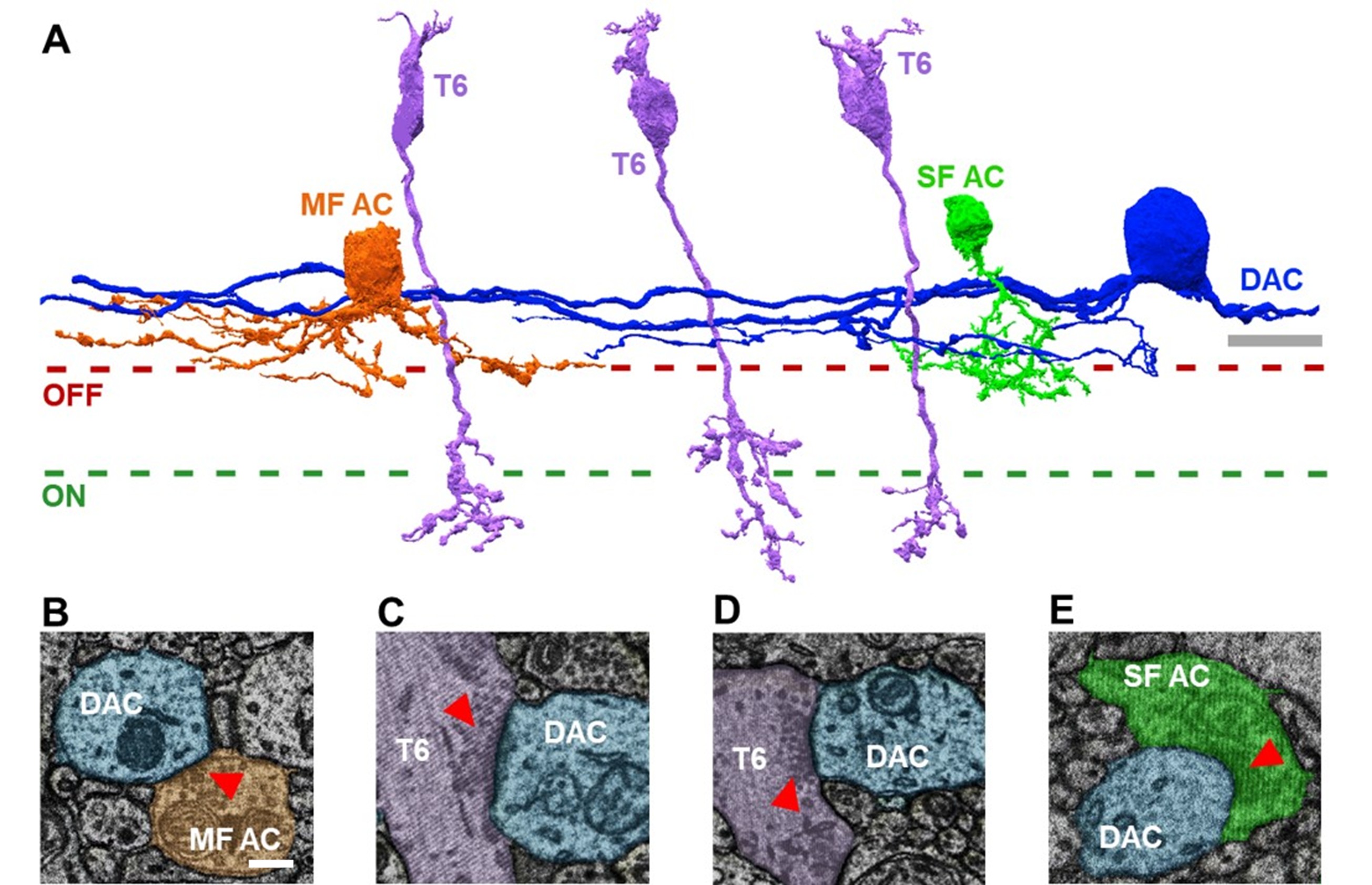
The retina is a key component of the central nervous system. This thin layer of neural tissue at the back of the eye is made up of complex networks of interconnected neurons that process visual information before it is sent to the brain. Among the many specialized cell types in the retina, dopaminergic amacrine cells (DACs) play a critical role in modulating how the retina adapts to different light conditions. The Renna lab's goal is to uncover the synaptic structures and circuits through which these cells operate, work that has important implications for understanding visual dysfunction in conditions like Parkinson's disease, diabetes, and myopia. To do this, we use connectomics, the study of mapping neural structures, and we work with large-scale 3D electron microscopy datasets. By tracing neurons and identifying their synaptic connections in extraordinary detail, we can build a comprehensive map of how DACs are wired into the retinal circuit.
Please note, this is a computer-based research project, not a wet lab. Students will work with 3D electron microscopy datasets to trace neurons, locate synapses, and help map the connectivity of dopaminergic circuits in the retina. Work can be done in the lab or remotely. Due to the independent nature of this project, students should be self-motivated, detail-oriented, and comfortable working on their own.
Opportunities for Students:
- Gain experience using neuron tracing software
- Learn how to identify neuroanatomical structures and trace cells and circuits
- Attend weekly lab meetings when in town
- Learn more about the field of neuroscience, retinal function, and the role of dopamine in vision
Required Experience:
No previous lab experience is required. We will teach you everything you need to know!
Time Commitment:
We expect students to dedicate at least 9 hours a week to this project, starting in May and concluding in December 2026 (or longer if the student wishes to continue).