
Application and Admission Procedures
Application Process Step-By-Step
CSDCAS Application Portal - Apply online
-
- Create a CSDCAS account
- In the "Add Program" tab, search for the University of Akron Speech-Language Pathology program and add the program
- Complete and submit the CSDCAS application with all required materials
- We recommend completion by mid-November, to ensure the application is processed and verified by the deadline
- Submit any updates to your CSDCAS application as they occur (GRE scores, transcripts, etc.)
- More about CSDCAS
- Create a CSDCAS account
- For additional information, please read these helpful tips for surviving the graduate school application process
Application and Admissions Timeline for Fall 2025 Start
|
Application Period Opens |
August 1 |
|
Application Period Closes** |
December 15, 2024 |
|
Interviews |
February 14, 2025 |
|
Admission Notifications |
March 15 |
|
Applicant Admission Decision Due |
April 15 |
|
Orientation |
Mid- |
|
Program of Study Begins |
Following the Academic Calendar |
- Note: The on-campus graduate SLP program admits for FALL SEMESTER ONLY.
- **CSDCAS application must be VERIFIED (i.e., GPA calculated, application complete, submitted, and CSDCAS fee paid) by the deadline
For More information:
Admission Standards
The listed admission requirements below are the minimum criteria used by the Graduate School and the School of Speech-Language Pathology and Audiology in processing admission applications. Admission is competitive. It is not unusual for many more qualified individuals to apply than can be admitted to the program; therefore, meeting these requirements does not guarantee that an applicant will be admitted to the program. Applicants must also demonstrate competency in oral and written communication and language.
The University of Akron does not discriminate on the basis of sex, sexual orientation, race, color, religion, age, handicap, status as a veteran, or national or ethnic origin in the administration of its educational policies, admission policies, scholarship and loans programs, or other school-administered programs.
Applicants to the program must possess a bachelor's degree in speech-language pathology or complete a post-baccalaureate sequence of courses from an accredited university. Students with a minimum overall and in-field GPA of 3.0 or higher will be considered for the speech-language pathology program.
- Applicants must be able to submit transcripts from at least one semester of post-baccalaureate courses at the time of their application.
- It is acceptable for students to apply if they are taking post-bacc courses during the fall semester – however, applicants must be certain that an updated transcript is sent once grades have posted at the end of the semester. Fall transcripts should be submitted as part of an Academic Update within CSDCAS.
Applicants to the program should complete the academic course requirements for ASHA Standards IV-A (general education) and IV-B & C (in-field) prior to entering the graduate program. These courses must be taken for credit and grade (not pass-fail or audit). In order to count as a prerequisite, the course should be 3 credit hours or more with a grade of C or higher in general education courses, and a grade of B- or higher in in-field courses. (Note: This change in the minimum B- requirement for in-field prerequisite courses will be effective starting with those applying to start the campus-based program in 2022 and the distance learning program in 2023).
The following ASHA Standard IV-A (general education) courses should be completed at the undergraduate level:
-
- Biological Science - a human/animal biological science course other than the anatomy and physiology of the speech and hearing mechanism (human anatomy, physiology, general biology, cell biology, etc.)
- Statistics – “stand alone” statistics course (not a research methods course)
- Physical science – chemistry or physics required
- Social science - psychology, sociology, anthropology, etc.
The following ASHA Standard IV-B (in-field) courses should be completed at the undergraduate level:
-
- Biological bases - anatomy of the speech and hearing mechanism
- Acoustic bases - speech and hearing science
- Developmental bases - language acquisition/development
- Linguistic bases - phonetics or linguistics
The following ASHA Standard IV-C (in-field) courses should also be completed at the undergraduate level:
-
- Observations and Clinical Techniques
ASHA Standard V-C should be taken at the undergraduate level and prior to any direct contact with clients. Students should take a course that addresses clinical methods and techniques and allows them to accrue 25 guided clinical observation hours. The observation hours must be within the ASHA Scope of Practice in Speech-Language Pathology and must be under the supervision of a qualified SLP who holds a current ASHA certification. During the observations, there should be communication between the clinical educator and observer, rather than passive experiences where the student merely views sessions and/or videos. Guided clinical supervision may occur simultaneously during the student’s observation or afterwards through review and approval of the student’s written reports or summaries. Students may use video recordings of client services for observation purposes.”
Our program has a 7-year limit for undergraduate coursework. Students wishing to apply to our graduate program, who have a bachelor’s degree in SLP that is greater than 7 years old, will need to take some of the pre-requisite courses again. These would be considered as post-baccalaureate courses. We will work individually with students, based on their transcripts and experiences, to determine which courses need to be taken.
English Language Proficiency
If English is not the applicant's primary language, they must demonstrate competency in oral and written communication and language by submitting English proficiency test scores
- The University of Akron Graduate School requires:
- a minimum score of 79 on the internet-based TOEFL (CSDCAS code: C122)
-or- - a minimum score of 6.5 on the IELTS test to enroll
- Students may not enroll in graduate courses until the English proficiency requirements has been satisfied (https://bulletin.uakron.edu/graduate/general-information/)
- a minimum score of 79 on the internet-based TOEFL (CSDCAS code: C122)
Applying to our program requires the submission of an application through CSDCAS.
A Statement of Purpose essay must be included with the CSDCAS application.
- Only submit through CSDCAS, and do not sent directly to The University of Akron.
- The prompt for the essay may be found within the CSDCAS’ program application but also presented here: "Please describe your background, your in-field and life experiences, and your aspirations as an SLP"
- The essay should be approximately 1-2 typed pages, address the four items in the prompt, and be well-written without grammatical or spelling errors.
- CSDCAS allows applicants to enter different essays for different schools.
- Applicants are highly encouraged to personalize the essay for The University of Akron.
Our program requires three (3) letters of recommendation.
- All letters must be submitted through CSDCAS. Letters sent directly to our department will NOT be considered or evaluated as part of a student’s application.
- At least one letter must be from an in-field instructor (professor or instructor).
- Other letters should be from people who can attest to students’ academic and/or clinical abilities, potential to succeed in a graduate SLP program, and potential as a future clinician.
- Examples of recommenders include: clinical supervisors, faculty in other disciplines, coaches, and job supervisors.
Information that is typically found on a resume will be entered into the CSDCAS application, in the “Extracurricular and Volunteer Activities” section.
- This includes work experience, volunteer experience, extracurricular activities, organizations, awards, etc.
- Please include detailed information for all items entered into the application
- Please do NOT submit a separate resume
Official transcripts from ALL colleges/universities attended (including post-secondary) must be submitted to CSDCAS. Once CSDCAS has verified all coursework, the application will be forwarded to our school.
- Please do not wait until the end of fall semester to submit your transcripts to CSDCAS
- Do not ask your university to hold your transcript request until your fall transcripts are posted
- In either case, your application will not be verified on time, and it will not be considered by the Application Committee
- In order for your application to be processed and verified by the deadline, you should send CSDCAS your fall transcripts through an Academic Update
- It is not necessary to submit transcripts directly to The University of Akron. Our Graduate School will accept the CSDCAS as an official transcript
Our program includes, and requires, an interview as part of the application process.
- Once the faculty admissions committee has reviewed all applications which have been VERIFIED by the deadline, selected applicants will be invited to interview
- Our interview day is held in February and is by invitation only
- Invited applicants will be notified via email, approximately 2 weeks prior to the interview date
- Applicants who are not invited to interview are typically no longer under consideration for admission to our program
- They will be notified via email of their status at the time that the interview invitation decisions are made – typically in early to mid February
- Applicants will be interviewed by faculty members and then asked to complete a writing sample on Interview Day
Our program requires that admitted students pass a background check prior to beginning the program. Background screenings may include checking state and federal criminal records and sex offender registries. If your background screening shows that you have a criminal record or are listed as a sex offender, you may not be able to secure clinical placements. This background check would be conducted after students accept an offer of admission and before they begin the program. The State of Ohio may deny licensure for individuals who have been found guilty of committing acts which are contrary to public health and safety. When you apply for our program, you are attesting that you understand that your enrollment is subject to completing a background check.
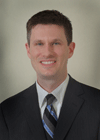
Traditional On-Campus Graduate SLP Program
Charles Carlin, Ph.D., CCC-SLP, Associate Professor
330-972-6556
carlin@uakron.edu
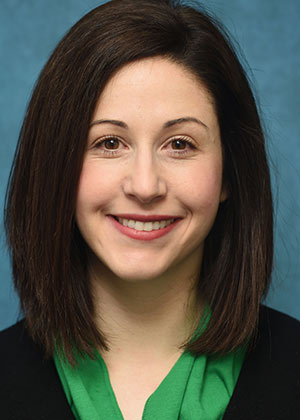
Distance Learning Graduate SLP Program
Caitlin N. Perry, M.A., CCC-SLP, Distance Learning Coordinator SLP
330-972-4667
cperry@uakron.edu

Scan or Click Here for
University of Akron offered
Resources for Graduate Students