UA in the News / Recent Headlines
UA students earn third place in regional cyber penetration testing competition
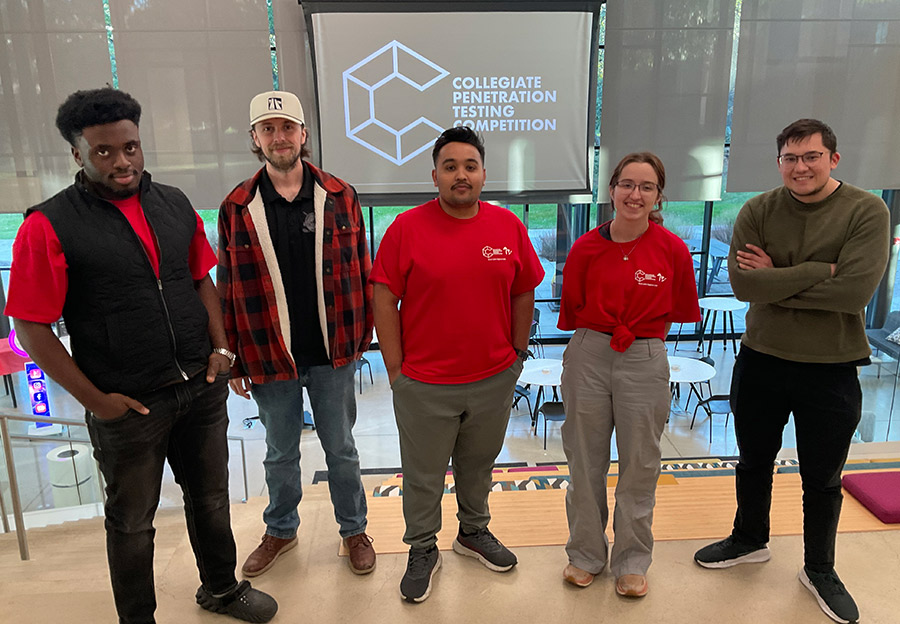
A team of five University of Akron cyber students earned third place in the Great Lakes Regional competition of the 2026 Global Collegiate Penetration Testing Competition (CPTC), held Oct. 24-25 at Baldwin Wallace University in Berea, Ohio.
UA competed against teams from nine other higher education institutions and technical institutes in a simulated cybersecurity engagement designed to mirror the work of professional penetration testers. The third-place finish put UA on the podium alongside first-place Purdue University and runner-up Pennsylvania State University.
Led by team advisor and coach Stanley Smith, professor of cyber forensics and Cyber Range Regional Programming Center coordinator, the team brought together students from UA’s Network Forensics and Computer Forensic Methods classes. Team members included Chinonso Nneji, Bijay Kumar Khatri, Emily McGuire, John Fuge and Emmanuel Tan.
During the competition, the students stepped into the role of professional security consultants, conducting a simulated penetration test under a strict time limit. Their work included mapping an unfamiliar network to identify active systems and services, testing web applications, databases, authentication systems and network services, and identifying potential security vulnerabilities.
The challenge required the students to apply their technical knowledge while coordinating their efforts, communicating discoveries, exercising sound judgment and developing practical solutions. Their work culminated in a professional penetration testing report featuring an executive summary, risk-rated vulnerabilities, industry-standard Common Vulnerability Scoring System (CVSS) ratings and actionable recommendations for remediation.
“Finishing third in a competition of this caliber is a tremendous accomplishment for our students,” Smith said. “They had to do more than identify security vulnerabilities — they had to think critically, work together under pressure and communicate their findings in a professional, actionable way. Experiences like this help bridge the gap between classroom learning and industry practice, preparing our students to take on the complex cybersecurity challenges organizations face every day.”
The competition provided students with hands-on experience using the tools, techniques and standards employed by cybersecurity professionals. By completing the engagement from initial network reconnaissance through final reporting, the students gained practical insight into the responsibilities of professional penetration testers and the role of network and digital forensics in identifying and addressing security risks.